
How to Start Power Tiller Rental Business: Profitability & Risks
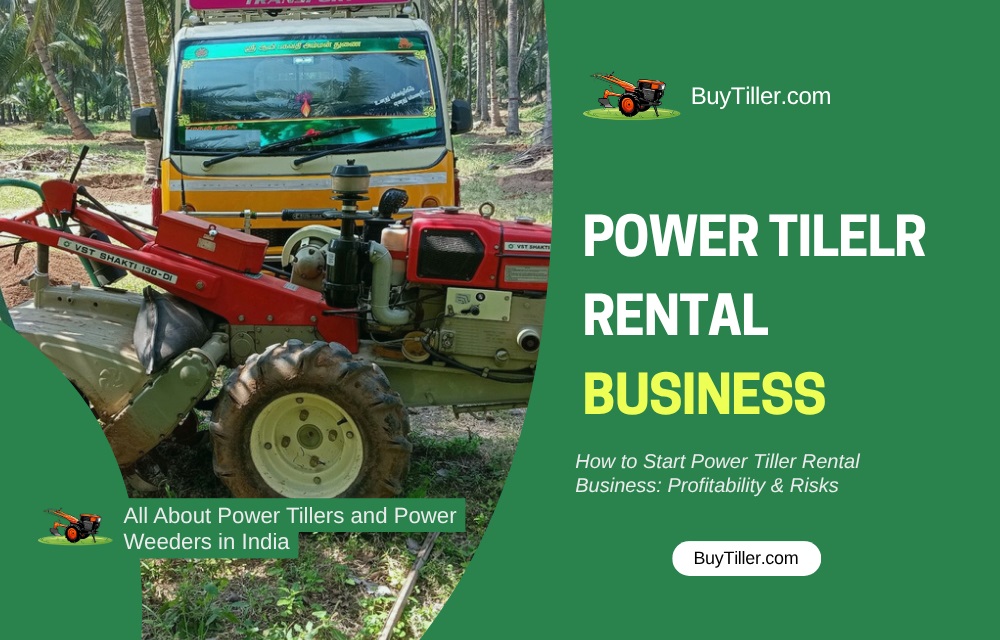
The rising cost of farm labor and machinery ownership has made the power tiller rental business one of the most promising rural enterprises in India. As small and marginal farmers look for affordable mechanization options, renting power tillers offers a win-win solution- it helps farmers access modern equipment without high upfront costs, and allows entrepreneurs to earn a steady income from their investment.
In this detailed guide, we’ll explore how to start a power tiller rental business in India, calculate profitability, understand potential risks, and identify best practices for long-term success.
Why Start a Power Tiller Rental Business?
India has over 86% small and marginal farmers, most of whom own less than two hectares of land. Buying a new power tiller costing between ₹90,000 to ₹2,50,000 is often not feasible for them. Renting becomes a practical alternative- and that’s where your business opportunity lies.
Instead of depending solely on crop income, many rural youth and small entrepreneurs are now investing in popular power tiller brands like VST Shakti, Kirloskar, and Greaves and renting them to local farmers on an hourly or daily basis. The demand is particularly high during land preparation and wedding seasons.
Step-by-Step Guide to Starting a Power Tiller Rental Business
1. Research Local Demand
Before you buy equipment, assess your local market. Visit nearby villages and ask farmers about their crop cycles, land sizes, and tillage requirements. Areas with paddy, vegetables, or sugarcane cultivation tend to have higher demand for tillers and attachments like ridgers and seeders.
2. Choose the Right Power Tiller
Select a model that suits your region’s farming needs. Diesel-powered tillers (9–16 HP) are preferred for larger fields and heavy soil, while compact models like VST 95 DI Ignito or Honda FJ500 are ideal for smaller farms and orchards.
It’s smart to compare Power Tillers vs Mini Tractors before investing- as tillers are cheaper to maintain and easier to operate for short-term rentals.
3. Understand the Costs Involved
Here’s a typical cost breakdown for setting up a power tiller rental business:
- Power Tiller Purchase: ₹1,20,000 – ₹2,00,000 (depending on model)
- Attachments (plough, ridger, trailer): ₹25,000 – ₹60,000
- Fuel & Maintenance: ₹5,000 – ₹8,000 per month
- Transportation (tractor/trailer): ₹20,000 – ₹50,000 (optional)
- Registration & Insurance: ₹5,000 – ₹10,000
You can reduce your investment by purchasing through a subsidy program. Refer to our detailed guide on Power Tiller Subsidy in India to explore central and state-level schemes that reimburse up to 50% of the machinery cost.
Profitability: How Much Can You Earn?
The rental rates for power tillers depend on horsepower, region, and attachments. On average, farmers charge between:
- ₹500–₹800 per hour (diesel tillers with operator)
- ₹1,000–₹1,500 per acre (for full land preparation)
- ₹2,000–₹3,000 per day (for multi-attachment usage)
Let’s estimate your potential earnings:
- Average rent per day: ₹2,000
- Operating days per month: 20
- Monthly revenue: ₹40,000
- Fuel & maintenance: ₹7,000
- Net profit: ₹30,000–₹33,000 per month
In short, you can recover your investment in 6–8 months during the first year, making it one of the most profitable rural businesses for small entrepreneurs.
Key Success Factors
To run your business effectively, focus on the following factors:
- Reliable Equipment: Choose brands with strong after-sales service and easy spare part availability. Learn more from our post on Greaves Power Tiller Spare Parts List.
- Regular Maintenance: Follow a schedule for oil changes, blade sharpening, and belt inspection. See our Maintenance of Power Tillers guide for details.
- Skilled Operator: Train yourself or hire someone who can handle multiple attachments and field conditions safely.
- Customer Relationships: Build trust with local farmers by offering flexible rental terms and quick service support.
- Seasonal Marketing: Advertise before sowing and harvesting seasons through WhatsApp groups, agri-dealers, and local KVKs.
Risks & Challenges to Consider
Every business has challenges- and the power tiller rental trade is no exception. Understanding the risks early helps you manage them better.
1. Seasonal Demand
Power tiller demand fluctuates with crop seasons. During monsoon and post-harvest months, rentals may drop sharply. You can reduce downtime by offering tiller services for orchards or inter-cultivation work.
2. Machine Wear & Tear
Frequent use by different operators can accelerate wear. Proper inspection after every job and regular servicing prevent costly breakdowns.
3. Fuel Price Volatility
Diesel cost changes can affect your profit margins. Consider switching to petrol or hybrid tiller models for lighter applications.
4. Delayed Payments
Farmers may pay after harvest or crop sales, leading to delayed cash flow. Always maintain records and use simple agreements for transparency.
5. Competition from Subsidized Machines
Government-subsidized cooperative centers and FPOs may offer cheap rental rates. To compete, focus on convenience, local availability, and timely service.
Tips to Improve Profitability
- Add Multiple Attachments: Use seeders, ridgers, potato diggers, and water pumps to offer more services.
- Offer Operator Service: Include trained operators in rental packages to attract farmers who lack experience.
- Expand into Post-Harvest Work: Provide threshing, residue management, or turmeric harvesting during the off-season.
- Maintain Digital Records: Use a simple app to track rental hours, payments, and maintenance schedules.
- Partner with Dealers: Work with authorized dealers for spare parts and quick repair assistance.
Government Support for Agri Equipment Rental
The Indian government supports the growth of rental businesses under the Custom Hiring Centre (CHC) Scheme. Entrepreneurs can apply for subsidies of up to 40% for setting up mechanization hubs. States like Maharashtra, Tamil Nadu, and Odisha have dedicated programs to support rural youth through the rental of farm equipment.
For detailed subsidy and application procedures, visit our Agriculture Machinery Subsidy Portal page.
Is Power Tiller Rental a Good Business in India?
Yes- with the right equipment, location, and marketing, it can be a highly profitable, low-investment venture. The growing focus on farm mechanization in India and government-backed schemes makes it a sustainable source of income for small entrepreneurs, self-help groups, and FPOs.
FAQs on Power Tiller Rental Business
1. What is the investment required to start a tiller rental business?
You can begin with a single diesel tiller costing around ₹1.5–₹2 lakh. With subsidies, the entry cost may drop to ₹80,000–₹1 lakh.
2. How much profit can I earn monthly?
A single power tiller can earn ₹25,000–₹40,000 per month in active seasons, depending on location and utilization.
3. Is a license or registration required?
No specific business license is needed, but it’s good practice to register under the local panchayat or FPO for legitimacy.
4. Can I rent different attachments along with the tiller?
Yes, attachments like rotary tillers, seeders, and potato diggers increase rental value and income potential.
More Reading:
- Power Tiller vs Power Weeder
- Best Power Tillers for Small Farms in India
- Power Tiller Attachments & Uses
- Power Tillers for Village-Level Farming
Conclusion
The power tiller rental business in India combines profitability with rural empowerment. With rising demand for affordable mechanization, it’s an ideal opportunity for rural youth, FPOs, and agri-startups. By maintaining reliable equipment, building farmer trust, and using smart marketing, you can create a sustainable and rewarding enterprise that supports India’s agricultural growth.