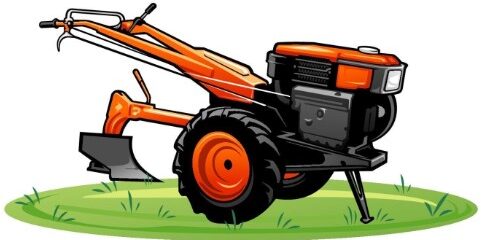
Power Tiller vs Power Weeder: What’s the Difference and Which One is Right for You?

Mechanization has transformed farming in India by saving time, reducing manual labor, and increasing productivity. Among the most commonly used machines in modern agriculture are the power tiller and the power weeder. While both are useful for land preparation and maintenance, they serve different purposes. But many farmers in India often ask: what’s the difference between a power tiller and a power weeder? In this article, we’ll explore the differences between a power tiller and a power weeder, their applications, price range, and how to choose the right machine for your farm.
What is a Power Tiller?
A power tiller is a walking-type tractor used for both primary and secondary tillage. It is a versatile, fuel-efficient machine designed to perform a variety of farming tasks. Power tillers are equipped with diesel or petrol engines ranging from 8 HP to 16 HP or more and are capable of ploughing, tilling, puddling, sowing, and even transporting loads using attachments.
These machines are best suited for medium to large farms (1 to 5 acres or more) and can handle heavier operations compared to mini tillers or weeders. Power tillers are commonly used in paddy fields, dryland farming, and for vegetable cultivation when deeper soil loosening is needed.
What is a Power Weeder?
A power weeder is a compact machine primarily used for removing weeds between rows of standing crops. Unlike power tillers, weeders are lighter, smaller in size, and usually range from 3 HP to 8 HP in engine capacity. They are ideal for horticulture, vegetable farms, inter-row cultivation, and areas with limited space like orchards or polyhouses.
Power weeders are mostly petrol-operated and easy to handle even in narrow paths. Many come with attachments for ridging, furrowing, and soil aeration, making them a favorite among small-scale farmers and kitchen garden owners.
Power Tiller vs Power Weeder – Feature Comparison
| Feature | Power Tiller | Power Weeder |
|---|---|---|
| Engine Power | 8 HP to 18 HP | 3 HP to 8 HP |
| Fuel Type | Diesel / Petrol | Petrol (mostly) |
| Weight | Heavy (100–300 kg) | Lightweight (30–80 kg) |
| Land Coverage | 1 to 5 acres | 0.2 to 1.5 acres |
| Main Use | Ploughing, tilling, puddling, and transport | Weeding, inter-row cultivation |
| Attachments | Plough, cage wheels, water pump, trailer | Ridger, sprayer, potato digger |
| Ease of Use | Requires training and strength | User-friendly, less fatigue |
| Price Range (2026) | ₹1.5 lakh to ₹2.8 lakh | ₹25,000 to ₹85,000 |
Applications: Where Each Machine Performs Best
| Activity | Best Machine | Why? |
|---|---|---|
| Primary Tillage | Power Tiller | Better soil penetration and deeper tillage |
| Weed Removal in Standing Crops | Power Weeder | Compact size fits between crop rows |
| Paddy Puddling | Power Tiller | The diesel engine and rotavator handle wet fields |
| Polyhouse & Kitchen Garden | Power Weeder | Lightweight and low-noise operation |
| Multi-crop Operations | Power Tiller | Supports a wide range of attachments |
Popular Brands in India
India’s agriculture machinery market is filled with several trusted brands offering power tillers and weeders. Some focus on durability, while others provide affordable options with service support. Below, we’ve categorized them into two groups: brands known for their power weeders and those specializing in power tillers, along with their popular models.
🔹 Popular Power Weeder Brands and Models
- Kisankraft
Known for economical and compact weeders, ideal for small farms and horticulture.- Kisankraft KK-IC-205P – 6.5 HP petrol weeder for vegetable farms
- Kisankraft KK-IC-400D – 4 HP diesel weeder, popular for inter-row cultivation
- Husqvarna
A Swedish brand offering durable, ergonomic machines for gardeners and urban growers.- Husqvarna TF 230 – Lightweight petrol weeder with a 196cc engine
- Husqvarna TF 545P – High-performance 5.5 HP tiller/weeder for tough soil
- Stihl
Renowned for compact, easy-to-handle cultivators ideal for home use and orchards.- Stihl MH 610 – A lightweight petrol weeder with reverse gear
- Stihl MH 710 – Heavy-duty rotary tiller suitable for rugged soil
- XtraPower / Extra Power
An Indian brand offering value-for-money weeders with good after-sales support.- XtraPower XPW 1050D GOLD – Diesel weeder for 0.5 to 2-acre farms
- Extra Power XPW 750T PTO – Compact petrol weeder for tight field spaces
🔹 Popular Power Tiller Brands and Models
- VST Shakti
One of India’s most trusted tiller manufacturers with models for every budget.- VST Shakti 130 DI – 13 HP diesel tiller with excellent pulling capacity
- VST Shakti 165 DI – Electric start model suited for paddy and dry fields
- Kirloskar
Known for robust engines and long-lasting performance in Indian field conditions.- Kirloskar Mega T 15 – Powerful 15 HP tiller for 2–5 acre landholdings
- Kirloskar Min T 8 – Mid-range tiller for mixed land types
- Kubota
A Japanese brand delivering premium diesel tillers for heavy-duty farming.- Kubota PEM140DI – Advanced tiller with ergonomic handle and durability
- Kubota PEM85 – Compact model for hilly or terrace farms
- KAMCO
Kerala-based PSU manufacturer offering subsidy-eligible diesel tillers.- KAMCO Power Tiller KMB 200 – Ideal for paddy puddling and tillage
- KAMCO Super DI 120 Tiller – Suitable for medium to large holdings
💡 Which Brand is Right for You?
If you have a vegetable farm or intercropped field under 1.5 acres, brands like Kisankraft, STIHL, and Xtrapower offer affordable weeders with solid performance. For larger farms and full-scale tillage, consider brands like VST Shakti, Kirloskar, and Kubota, known for reliable power tillers and long-term durability.
Pros and Cons of Power Tillers
✅ Advantages of Power Tillers
- Multi-purpose Functionality: Power tillers can perform a variety of tasks, ploughing, puddling, inter-cultivation, transportation (with trailer), water pumping (with attachment), and more. This makes them extremely versatile for medium to large farms.
- Powerful Engines: With engine capacities ranging from 8 HP to 18 HP, power tillers are capable of handling hard soils, wet fields, and deep tillage operations that smaller machines cannot perform.
- Deep Tillage Capability: Power tillers are designed for breaking up hardpan soil layers and turning over large volumes of earth, which improves soil aeration and root penetration for crops.
- Attachment Support: They can be fitted with cage wheels, trailers, seed drills, ridgers, ploughs, and reapers, offering multi-season utility.
❌ Disadvantages of Power Tillers
- High Initial Cost: Power tillers are relatively expensive, with prices ranging from ₹1.5 lakh to ₹2.8 lakh. This may be unaffordable for small farmers without subsidy support.
- Bulky and Heavy: Due to their weight and size, power tillers can be harder to maneuver, especially for elderly or less-experienced operators.
- Limited Usability in Narrow Fields: They are not ideal for inter-row cultivation in vegetable or horticulture plots where the space between crop rows is limited.
Pros and Cons of Power Weeders
✅ Advantages of Power Weeders
- Affordable for Small Farmers: Power weeders typically cost between ₹25,000 and ₹85,000, making them a cost-effective choice for small and marginal farmers.
- Lightweight and Easy to Handle: Their compact size and low weight allow farmers to use them comfortably in narrow beds, orchards, and small vegetable plots.
- Efficient for Inter-Row Work: Power weeders are specially designed for weeding between rows of standing crops like cotton, turmeric, sugarcane, or brinjal. They reduce manual weeding and save labor costs.
- Ideal for Small Farms: For farms under 1 acre or in kitchen gardens and greenhouses, a power weeder is often more practical than a larger tiller.
❌ Disadvantages of Power Weeders
- Limited to Surface Work: Power weeders are not designed for deep tillage or breaking hard soil, which limits their usage to weed removal and shallow cultivation.
- No Load-Carrying Capacity: Unlike power tillers, weeders cannot be used for transportation or trailer attachment, reducing their multi-purpose value.
- Less Suitable for Large Fields: For medium to large landholdings, the time and effort required to cover the area with a small power weeder may be inefficient compared to a power tiller or tractor.
Who Should Buy What?
Choosing between a power tiller and a power weeder depends largely on farm size, crop type, soil condition, and the kind of operations performed throughout the year. The table below gives a clear recommendation based on common Indian farming scenarios.
| Farmer Type | Recommended Machine |
|---|---|
| Vegetable / Horticulture Growers (less than 1 acre, close row spacing) |
Power Weeder Ideal for inter-row weeding, soil aeration, and frequent field maintenance with low fuel cost. |
| Paddy and Dryland Farmers (1 to 5 acres, seasonal land preparation) |
Power Tiller Suitable for ploughing, puddling, seedbed preparation, and handling both wet and dry soil conditions. |
| Polyhouse / Home Garden Users (limited space, controlled environments) |
Mini Power Weeder Lightweight, low-noise, and easy to maneuver in narrow paths without damaging plants. |
| Farmers with Transport or Multiple Operations (input movement, harvest transport, water pumping) |
Power Tiller (with trailer) Acts as a multi-purpose machine for tillage, hauling produce, and reducing dependence on tractors. |
In simple terms, farmers focused on weed control and regular crop maintenance will benefit more from a power weeder, while those needing heavy soil work, seasonal land preparation, and transport support should invest in a power tiller.
Suggestion: If your farm size is expanding or you plan to take up custom hiring work, starting with a power tiller offers better long-term flexibility.
Power Tiller vs Power Weeder Price Comparison
The price difference between a power tiller and a power weeder is significant, mainly due to engine capacity, build quality, fuel type, and the range of operations each machine can perform. While power weeders are designed to be affordable and easy to own, power tillers are long-term investments meant for heavier and multi-purpose farming operations.
Below is a rough price comparison based on average 2026 on-road prices in India. Actual prices may vary depending on brand, engine type (diesel or petrol), state taxes, dealer margin, and subsidy availability.
- Mini Power Weeder: ₹25,000 – ₹45,000Best suited for kitchen gardens, polyhouses, and very small vegetable plots. These machines usually come with 3–4 HP petrol engines and limited attachments.
- Standard Power Weeder: ₹55,000 – ₹85,000Commonly used by vegetable and horticulture farmers. These models offer better torque, wider working width, and support for ridgers or furrowers.
- 8–10 HP Power Tiller: ₹1.5 lakh – ₹1.8 lakhEntry-level power tillers suitable for dryland farming and small paddy fields. These models are often chosen by farmers upgrading from manual or bullock-based operations.
- 12–16 HP Power Tiller: ₹2.0 lakh – ₹2.8 lakhHeavy-duty tillers designed for continuous field work, puddling, trailer operation, and commercial use. These machines are popular among medium to large farmers and are often eligible for government subsidies.
Tip: Farmers planning to purchase a power tiller should also account for the cost of essential attachments such as cage wheels, rotavators, or trailers, as these can add ₹20,000–₹50,000 to the total investment.
Conclusion
While both machines have their place in modern agriculture, choosing between a power tiller and a power weeder depends on your specific needs. If your goal is heavy-duty soil preparation or transporting material, a power tiller is a better choice. But if you are a small farmer focused on weed control, inter-row cultivation, or compact farming, a power weeder will serve you well at a lower cost.
Tip: If your budget allows, many farmers now use both machines, one for major seasonal soil work and the other for year-round maintenance.
Still not sure which one to buy? Fill out the form below to get expert help, prices, and availability in your region.