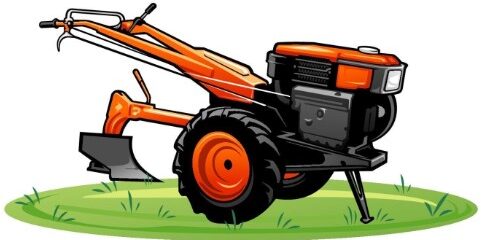
Power Tiller for Cotton Farming – Best Models, Benefits & Usage
Cotton farming is the backbone of Indian agriculture, especially in states like Maharashtra, Gujarat, Telangana, and Madhya Pradesh. One of the biggest challenges for cotton growers is managing weeds during the initial 60 to 90 days after sowing. Power weeders offer an efficient, cost-effective solution to control unwanted weeds between rows and around plants, significantly improving yield and reducing labor costs.
🌾 Why Use a Power Weeder in Cotton Farming?
Cotton is a wide-row crop, typically sown at 60–75 cm spacing. This layout allows weed growth between rows, which competes with the crop for nutrients, water, and sunlight. A power weeder helps farmers:
- Control weed growth between cotton rows without harming the crop
- Loosen the soil and enhance root aeration for better crop health
- Reduce reliance on manual labor and herbicides
- Cover more area in less time, increasing efficiency
- Save up to 50% on weeding-related labor costs
🔧 How Power Tillers Work in Cotton Fields
Power weeders are lightweight machines powered by petrol or diesel engines. They use rotating blades, tynes, or star wheels to uproot weeds and stir the topsoil. For cotton fields:
- Inter-row weeders are used between two plant rows
- Adjustable-width machines allow precise operation for row crops like cotton
- Handlebar design ensures ease of control even in uneven terrains
- Depth can be adjusted based on crop growth stage
🛠️ Best Power Weeder Models for Cotton Farming
Here are some top-performing models trusted by Indian farmers for use in cotton cultivation:
| Brand | Model | Engine | Power | Best For |
|---|---|---|---|---|
| Kisankraft | KK-IC-205P | Petrol | 6.5 HP | Small and medium cotton farms |
| Greaves | GS 15 DIL | Diesel | 4.5 HP | Long field hours, rugged terrain |
| Honda | FJ500 | Petrol | 5 HP | Easy handling and fuel efficiency |
| Xtrapower | XPT 709 | Petrol | 7 HP | Large farms, quick coverage |
| VST | PG 50 | Petrol | 9 HP | Commercial use, custom attachments |
📍 Best Time to Use Power Tiller in Cotton Farming
The ideal weeding schedule for cotton is:
- First weeding: 20–25 days after sowing
- Second weeding: 40–45 days after sowing
- Third weeding (optional): 60–70 days depending on soil type and moisture
Using a power weeder during these stages ensures better soil health and weed suppression, helping the cotton crop establish firmly and mature with a higher boll count.
💡 Tips for Effective Weeding in Cotton Fields
- Use blade-type weeders in loamy soils and tine-type in hard soils
- Maintain a 1–2 inch depth to avoid root zone damage
- Operate in the morning or late evening to reduce crop stress
- Clean blades regularly to prevent weed residue buildup
- Pair weeder usage with mulch or drip irrigation for best results
💰 Price Range of Power Weeders in India
Depending on engine type and brand, power weeders range from:
- Entry-level petrol models: ₹25,000 – ₹40,000
- Mid-range diesel models: ₹45,000 – ₹70,000
- Heavy-duty machines: ₹80,000 – ₹1.5 lakhs
Government subsidies are available in many states under horticulture or mechanization schemes. Farmers can receive 40–60% reimbursement based on eligibility.
🔍 Comparison: Manual vs. Power Weeding in Cotton Fields
| Factor | Manual Weeding | Power Weeder |
|---|---|---|
| Labor Required | 5–7 people per acre | 1 operator |
| Time Taken | 8–10 hours/acre | 1.5–2 hours/acre |
| Cost | ₹1,000–₹1,500 per acre | Fuel cost only (₹150–₹250) |
| Precision | Low risk of crop damage | High, adjustable width/depth |
| Soil Aeration | Not effective | Improves root health |
🧑🌾 Farmer Testimonials
“Earlier, I had to hire 5 laborers for weeding cotton fields. After switching to a power weeder, I save over ₹1,000 per acre and finish faster with better soil quality.”
– Mahadev Patil, Farmer from Jalgaon, Maharashtra
“My vst pg 50 power weeder helped me control weeds even during water scarcity. It’s light, fast, and easy to handle.”
– Santosh Reddy, Cotton grower from Warangal, Telangana
📦 Final Thoughts – Should You Invest in a Power Weeder for Cotton?
If you grow cotton on more than 1 acre, a power weeder is a smart investment. It pays back in 1–2 seasons through saved labor costs and improved yield. Select a model that suits your soil type, crop spacing, and terrain, and consider brands that offer local service and spare parts.
Need help selecting the right power weeder? Contact us for dealer quotes, model comparisons, and subsidy information in your state.