
Use a Power Tiller for Greenhouse Bed Preparation: A Complete Guide for Farmers
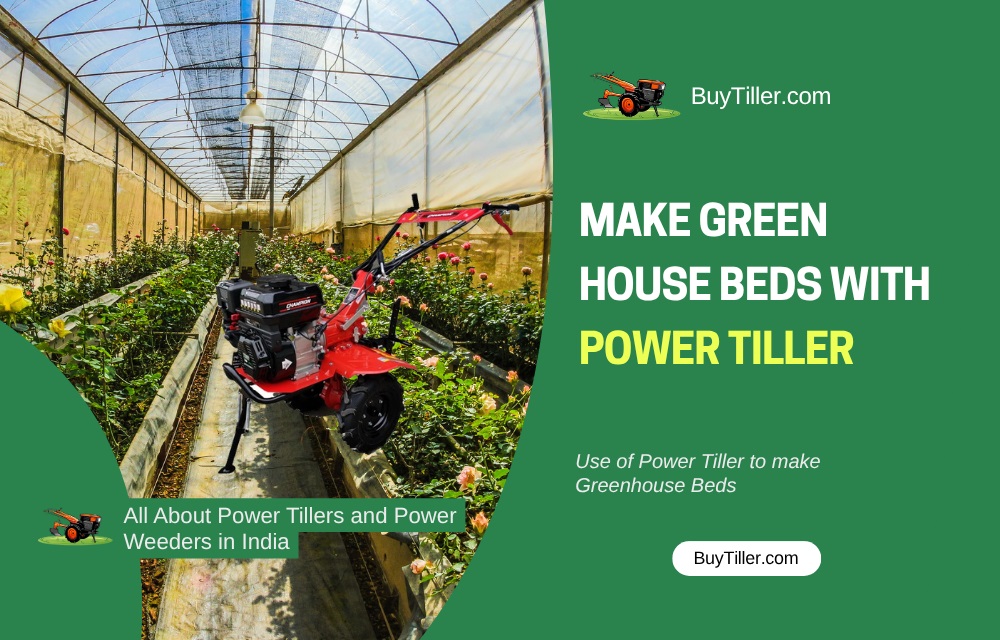
Greenhouse farming is transforming small-scale agriculture in India by enabling year-round cultivation and better crop quality. One of the most important steps before planting in a greenhouse is bed preparation. Proper soil preparation ensures good aeration, drainage, and nutrient availability for plants. Traditionally done with hand tools, farmers are now turning to mini and compact power tillers to make the process faster and more efficient.
1. Introduction
Preparing beds inside a greenhouse requires careful handling to maintain soil structure and balance moisture. Manual methods using spades or hoes are labor-intensive and time-consuming. In contrast, mini tillers and small power tillers allow farmers to prepare uniform beds within a fraction of the time.
Modern farmers use attachments like ridgers, bed formers, and rotary tillers that can be connected to power tillers. These tools help in loosening the soil, mixing organic matter, and forming raised beds perfectly suited for greenhouse vegetables like tomato, capsicum, cucumber, and leafy greens.
2. Why Bed Preparation Matters in Greenhouse/ Polyhouse Farming
Good bed preparation is the foundation of productive greenhouse cultivation. Here’s why it matters:
- Better Drainage & Aeration: Loose, well-tilled soil prevents waterlogging and allows roots to breathe, reducing fungal risks.
- Improved Root Zone Temperature: Proper soil structure helps regulate temperature, promoting faster germination and healthy root growth.
- Easier Irrigation Management: Uniform beds distribute water evenly, reducing wastage.
- Uniform Plant Growth: Well-prepared beds ensure consistent depth and spacing, leading to even crop maturity.
3. Traditional vs Mechanized Bed Preparation
Earlier, farmers relied on manual methods-using spades, hoes, or simple hand tools-to turn and shape the soil. While effective for small patches, it was slow, tiring, and inconsistent in large greenhouses.
With mechanized solutions, such as compact power tillers, the process is faster and more uniform. Small power tillers are designed for tight greenhouse aisles and can operate without disturbing the greenhouse frame. They also reduce manual labor costs and increase productivity by 3–5 times.
4. Power Tiller Use in Greenhouses or Polyhouses
Power tillers play an important role in greenhouse and polyhouse farming by helping prepare soil beds efficiently within limited spaces. Because greenhouse conditions differ from open-field environments, the choice of tiller should consider not only power but also maneuverability, emissions, and soil texture.
When selecting a power tiller for greenhouse operations, factors such as greenhouse size, soil type, and crop rotation frequency should guide your decision. The goal is to achieve fine soil tilth while minimizing fuel consumption and soil compaction.
- Ideal HP Range: Compact tillers in the 2–7 HP range are best suited for greenhouse or polyhouse use. These models provide sufficient torque for soil loosening and bed formation without producing excessive vibrations or heat, which could affect nearby plants.
- Type of Tiller: The choice between rear-tine and front-tine tillers depends on the nature of the operation:
- Rear-tine tillers are designed for deeper soil cultivation and are ideal when you need to incorporate compost or organic matter before planting.
- Front-tine tillers work better for shallow cultivation, topsoil aeration, and routine bed maintenance between crop cycles.
- Maneuverability: Since polyhouse aisles and beds are often narrow, choose a lightweight model (below 80 kg) with adjustable handles and compact tines. These features allow for easy turning and navigation between crop rows without damaging plants or structures.
- Power Source and Safety: Ventilation is critical when using petrol or diesel tillers in enclosed environments, as exhaust gases can harm plants and workers. In smaller greenhouses or urban setups, electric or battery-powered tillers offer a cleaner, quieter, and more eco-friendly alternative.
- Maintenance Tips: Regular cleaning of tines, proper lubrication, and timely filter changes ensure smooth operation and longer equipment life. Using rust-resistant models is advisable in humid greenhouse conditions.
Leading agricultural equipment manufacturers such as Balwaan, VST, Shrachi, and Kisankraft produce mini and micro tillers that cater specifically to protected cultivation needs. These machines combine efficiency with portability, making them ideal for small to medium greenhouse units.
By selecting the right power tiller, greenhouse growers can reduce labor costs, enhance soil health, and improve overall productivity while maintaining a clean and controlled growing environment.
5. How to Use a Power Tiller for Greenhouse Bed Making
Proper use of a power tiller inside a greenhouse improves soil structure, ensures even nutrient distribution, and saves manual labour. Follow the steps below to prepare raised beds efficiently and safely.
- Soil Loosening: Operate the tiller at a shallow depth of about 2–3 inches (5–8 cm) to break compact layers and improve aeration. Work only when the soil is moist but not waterlogged to avoid clumping and uneven tilling.
- Mixing Organic Matter: Spread compost, vermicompost, or biofertilizer evenly across the surface, then run the tiller at a slow speed to gently incorporate the material into the topsoil. This increases fertility and moisture retention.
- Bed Shaping: Attach a ridger or bed former to create raised beds. Typical greenhouse beds are 30–45 cm wide and ~10–15 cm high; adjust width according to crop and walkway spacing. Move slowly and keep a steady pace for uniform beds.
- Leveling: Use a small wooden leveler or drag plate after shaping to smooth the bed surface. Level beds ensure even seed/transplant placement and uniform irrigation.
- Irrigation Set-up: Lay drip lines or micro-tubes along the center of each bed immediately after forming them. Drip irrigation maintains consistent moisture and reduces water use.
Pro Tips
- Optimal soil moisture: Keep soil moisture ~20–25% before tilling.
- Speed control: Use low speed inside the greenhouse for better control and cleaner beds.
- Distance from walls: Avoid tilling within 30–40 cm of greenhouse walls or irrigation lines to prevent compaction or damage.
- Maintenance: Clean tines after use and check air/fuel filters on petrol/diesel models. Electric models require battery/cable checks.
- Safety: Ensure good ventilation with fuel engines; consider electric or battery models for small, enclosed spaces.
Following these steps will help produce uniform, fertile beds that promote healthy root development, better yields, and reduced manual labour.
6. Best Power Tillers for Greenhouse/Poluhouse Use
Here are some reliable power tillers commonly used for greenhouse and small farm operations:
| Model | Brand | HP | Approx. Price (₹) | Key Use |
|---|---|---|---|---|
| Balwaan BP-500 | Balwaan | 7 HP | ₹55,000 – ₹60,000 | Ideal for greenhouse soil preparation and light tilling. |
| VST FT50 Josh | VST Shakti | 5 HP | ₹60,000 – ₹70,000 | Compact and powerful tiller suitable for narrow paths. |
| Shrachi 4 HP Mini | Shrachi | 4 HP | ₹45,000 – ₹50,000 | Lightweight and easy to handle for polyhouse applications. |
7. Tips for Effective Bed Preparation
Proper bed preparation preserves soil health and improves plant performance. Use the following practical tips to prepare and maintain productive greenhouse beds.
- Avoid Over-Tilling: Excessive or deep tilling destroys soil structure and beneficial microorganisms, increasing erosion and reducing long-term fertility. Tillage should be minimal and targeted to the topsoil layer when possible.
- Maintain Soil Moisture: Operate the tiller when the soil is moist but not waterlogged. Too dry soil becomes dusty and clumpy; too wet soil compacts and forms clods. Ideal moisture improves tilling efficiency and bed finish.
- Sterilize Soil: To reduce soil-borne pathogens in reused greenhouse beds, consider solarization (clear plastic covers during hot months) or mild steam treatments where feasible. Avoid harsh chemicals that can harm beneficial microbes.
- Add Organic Matter: Incorporate well-rotted compost, coco peat, or vermicompost to improve soil structure, drainage, and water-holding capacity. Organic matter also feeds soil biology for healthier crops.
Small, regular improvements to soil (rather than heavy, infrequent interventions) yield the best long-term results for greenhouse productivity and sustainability.
8. Conclusion
Using a mini power tiller for greenhouse bed preparation not only saves time but also ensures uniform, healthy soil beds for high-value crops. Farmers can expect better yields, reduced labor costs, and improved efficiency in every growing cycle.
With the right attachments and a compact tiller, even small-scale farmers can achieve precision-level soil preparation inside greenhouses, a crucial step toward sustainable and profitable farming.
Related Posts:
- Best Mini Power Tillers in India
- Guide to Power Tiller Attachments
- Power Tiller Use in Organic Farming