Power Tiller Uses in Agriculture: A Complete Guide for Indian Farmers
In today’s modern farming era, Indian farmers are increasingly adopting machines that save time, reduce costs, and improve productivity. One such machine is the power tiller. It has transformed the way small and medium-sized farms operate across the country. From ploughing to transporting crops, this versatile machine can handle a wide variety of agricultural tasks.
Whether you’re cultivating paddy fields in Tamil Nadu, vegetables in Punjab, or horticultural crops in the Northeast, a power tiller can significantly reduce labor and improve productivity. But how exactly are these machines used?
In this detailed guide, you’ll learn about the top uses of power tillers in Indian agriculture, along with their benefits, suitable crops, and attachments that make farming easier and more efficient.
What is a Power Tiller?
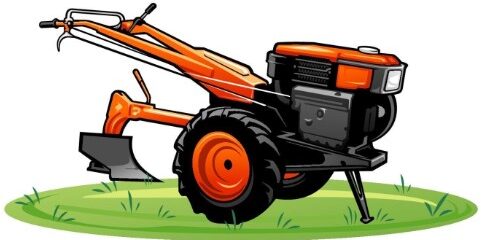
A power tiller is a small, walk-behind agricultural machine powered by a petrol or diesel engine. Farmers use it for various operations such as tilling, ploughing, sowing, weeding, and even transporting goods. Unlike large tractors, power tillers are compact and ideal for small farms, uneven terrain, and hilly regions.
Thanks to its multipurpose design, the power tiller has become a reliable tool for many Indian farmers, especially those with landholdings below 5 acres.
Top 10 Power Tiller Uses in Agriculture
1. Land Preparation and Tilling
One of the most common uses of a power tiller is land preparation. Farmers rely on it to break the soil, improve aeration, and make the land ready for sowing. This step is crucial because it helps roots grow deeper and absorb nutrients better.
- Dry Land Tilling: Farmers perform this before sowing crops like wheat, pulses, or maize.
- Wet Land Tilling: In paddy fields, tillers mix water and soil to prepare for transplanting.
2. Ploughing and Levelling
After tilling, farmers often attach a plough or leveller to the tiller. This allows them to break large clods and flatten the field. As a result, the land becomes uniform, which improves water flow and seed placement.
Moreover, compared to traditional bullock-driven ploughing, power tillers complete the job faster and with less physical effort.
3. Seed Sowing and Drilling
Farmers can connect a seed drill to the tiller to sow crops like maize, mustard, and sunflower. This ensures seeds go into the soil at a consistent depth and spacing. Consequently, crops grow more uniformly and yield better harvests.
Additionally, in rice-growing regions, farmers now use power tillers for direct seeding. This practice eliminates the need for transplanting and saves time during the busy kharif season.
4. Intercultivation and Weeding
Controlling weeds is a regular and time-consuming task on the farm. Fortunately, power tillers make it easier. By using attachments like rotary weeders or tines, farmers can remove weeds between rows quickly.
This technique not only saves time but also boosts crop health by reducing competition for nutrients and water.
5. Fertilizer and Pesticide Application
With suitable attachments, power tillers can also help in spraying fertilizers or pesticides. For example, farmers use boom sprayers and fertilizer spreaders with their tillers to cover large areas evenly.
Because the tiller covers the field uniformly, it prevents under- or over-application, which often happens during manual spraying.
6. Irrigation and Water Pumping
In remote areas where electricity is unreliable, power tillers serve another vital purpose. Farmers use them to operate water pumps through a belt pulley. This helps them draw water from wells, ponds, or canals for irrigation.
In fact, many diesel tillers come with built-in support for irrigation pumps, making them a cost-effective solution for water-scarce areas.
7. Transportation of Goods
When farmers attach a trailer to their power tiller, they can carry up to 800 kg of produce or supplies. This is especially helpful in rural areas with narrow lanes or hilly roads, where larger vehicles cannot enter.
They frequently transport harvested crops, seeds, fertilizers, or even construction materials around the farm or to nearby markets.
8. Puddling for Rice Cultivation
Puddling is a key step in preparing rice fields. It involves mixing water and soil to form a soft bed for transplanting seedlings. Power tillers equipped with puddling blades perform this job efficiently. In states like West Bengal, Assam, and Odisha, power tillers are widely used for puddling-mixing water and soil in paddy fields to create a soft bed for rice planting. Tiller blades are designed to churn and crush clods while conserving water.
This process helps conserve water, suppress weed growth, and create ideal conditions for rice plants to grow.
9. Horticulture and Orchard Maintenance
Power tillers are perfect for fruit orchards and vegetable farms. Their compact size allows them to move between rows of trees or beds easily. Farmers use them for tasks like inter-row tilling, pit digging, and applying compost.
As a result, many horticulture farms across Maharashtra, Himachal Pradesh, and Karnataka have adopted mini tillers for orchard management.
10. Community and Village Use
In many villages, farmers’ groups and panchayats use power tillers for community tasks. For example, they clear bushes along rural roads, level small plots, or maintain school gardens. Their versatility extends beyond traditional farming.
Common Attachments for Power Tillers
| Attachment | Primary Use |
|---|---|
| Rotavator | Tilling and mixing soil |
| Plough | Primary land preparation |
| Leveler | Smoothing the soil surface |
| Seed Drill | Uniform seed sowing |
| Sprayer | Fertilizer or pesticide application |
| Trailer | Transporting goods |
| Water Pump Pulley | Irrigation and water lifting |
Why More Indian Farmers Are Using Power Tillers
- They reduce manual labor and fatigue.
- Power tillers save time during peak sowing and harvesting seasons.
- They offer flexibility with multiple attachments.
- Fuel-efficient models are available at affordable prices.
- Government subsidies lower the initial investment cost.
Who Should Use a Power Tiller?
Power tillers are most suitable for:
- Small and marginal farmers with up to 5 acres
- Vegetable and fruit growers
- Horticulture and orchard farms
- Farmers in hilly or terraced regions
- Self-help groups and agri-service centers
Final Thoughts
Power tillers have revolutionized farming for smallholders across India. With their wide range of uses, from soil preparation to irrigation, they provide year-round support to hardworking farmers.
If you’re looking to save time, increase efficiency, and reduce manual labor, a power tiller is a smart investment for your farm. Plus, with subsidies available in most states, it’s easier than ever to get started.
Frequently Asked Questions (FAQ)
Q1. What are the most common uses of a power tiller?
Power tillers are commonly used for tilling, ploughing, sowing, weeding, irrigation, and transportation of farm goods.
Q2. Can I use one tiller for multiple operations?
Yes, by changing attachments, you can use the same tiller for a variety of tasks throughout the crop cycle.
Q3. Is a power tiller suitable for hilly areas?
Absolutely. Mini power tillers are ideal for sloped and narrow plots found in Himachal, Uttarakhand, and Northeast India.
Q4. How much land can a tiller cover in one day?
On average, a 6–7 HP tiller can cover 1 to 1.5 acres per day for tilling. This depends on soil conditions and operator experience.
Q5. Are government subsidies available?
Yes. Farmers can receive up to 40–60% subsidy under central and state mechanization schemes, especially if they belong to priority categories like SC/ST or women farmers.