Power Tiller for Dry Land Farming – Best Models & Uses Explained
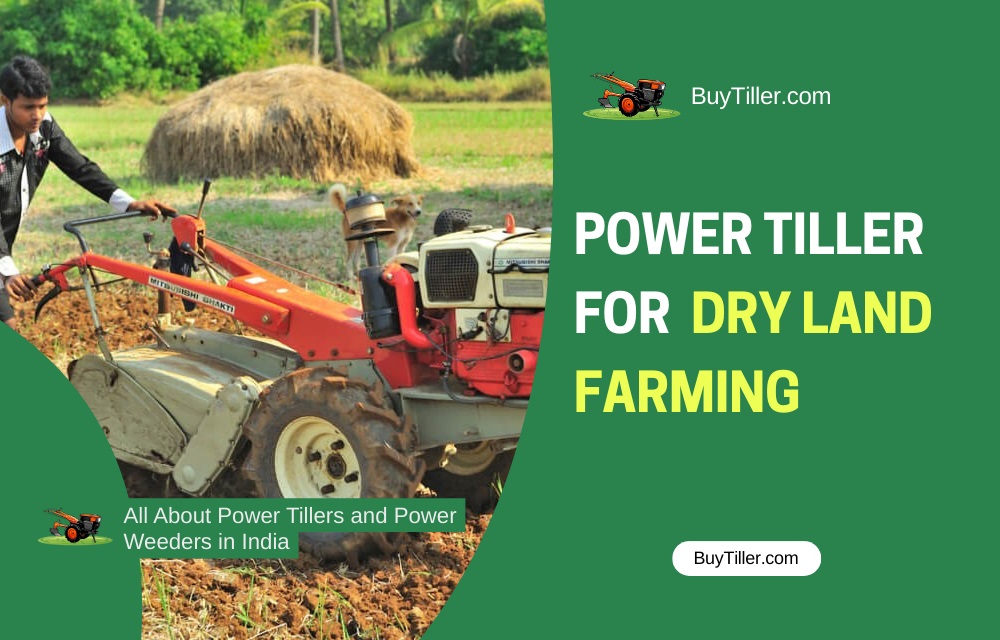
Dry land farming, also known as rainfed farming, requires special soil preparation techniques due to low moisture levels and hard soil conditions. Choosing the right power tiller for dry land farming is essential to ensure proper tillage, moisture conservation, and better crop establishment.
In this guide, we explain which type of power tiller works best for dry soil, recommended horsepower, useful attachments, and important buying tips for farmers.
Challenges of Dry Land Farming
Dry land farming areas typically face:
- Low soil moisture
- Hard and compact soil
- Irregular rainfall
- Higher weed pressure
Because of these conditions, light-duty machines are usually not sufficient. Farmers need a power tiller that can handle compact and dry soil effectively.
Recommended Power Range for Dry Land
For dry land farming, experts generally recommend:
- 7 HP to 13 HP diesel power tillers
- Strong gearbox and heavy-duty blades
- Proper traction wheels
Diesel engines are preferred because they provide higher torque, better fuel efficiency, and stronger pulling capacity compared to small petrol machines.
Best Attachments for Dry Land Farming
1. Mould Board Plough
Ideal for deep ploughing and soil inversion. It helps break compact layers and improves soil aeration.
2. Disc Plough
Works better in very hard or stony soils. It cuts through dry soil more effectively than regular ploughs.
3. Rotavator
After primary ploughing, a rotavator helps pulverize soil and prepare a proper seedbed.
4. Ridger
Useful for crops like groundnut, cotton, pulses, and maize grown in dry regions.
Power Tiller vs Tractor for Dry Land
| Feature | Power Tiller | Tractor |
|---|---|---|
| Cost | Lower investment | High investment |
| Fuel Consumption | Low | High |
| Land Suitability | Small to medium farms | Large farms |
| Maintenance | Affordable | Expensive |
For small and marginal farmers, a power tiller is often a more economical option than a tractor.
Best Crops for Dry Land Farming Using Power Tiller
- Groundnut
- Pulses
- Millets
- Cotton
- Maize
- Sorghum
Proper soil preparation using a power tiller improves moisture retention and enhances seed germination.
Buying Tips for Dry Land Farmers
- Choose diesel models with high torque
- Ensure availability of spare parts
- Check attachment compatibility
- Look for good dealer support
- Consider government subsidy schemes
Common Mistakes to Avoid
- Using mini tillers in hard dry soil
- Skipping primary ploughing
- Using worn-out blades
- Operating without proper wheel weights
Frequently Asked Questions
Is a mini tiller suitable for dry land farming?
No, mini tillers are not powerful enough for hard and compact dry soil.
Which HP power tiller is best for dry land?
7 HP to 13 HP diesel power tillers are generally recommended.
Can a power tiller replace a tractor in dry land?
For small farms, yes. For large-scale farming, tractors may still be required.
Does dry soil require special blades?
Yes, heavy-duty and sharp blades perform better in dry conditions.
Conclusion
Selecting the right power tiller for dry land farming can significantly improve soil structure, crop yield, and overall farm efficiency. Diesel-powered tillers with strong attachments are ideal for handling compact, moisture-deficient soil.
For small and marginal farmers in rainfed areas, a well-chosen power tiller offers an affordable and practical alternative to tractors.