Comparing Chinese Power Tiller Imports vs Indian-Made Models
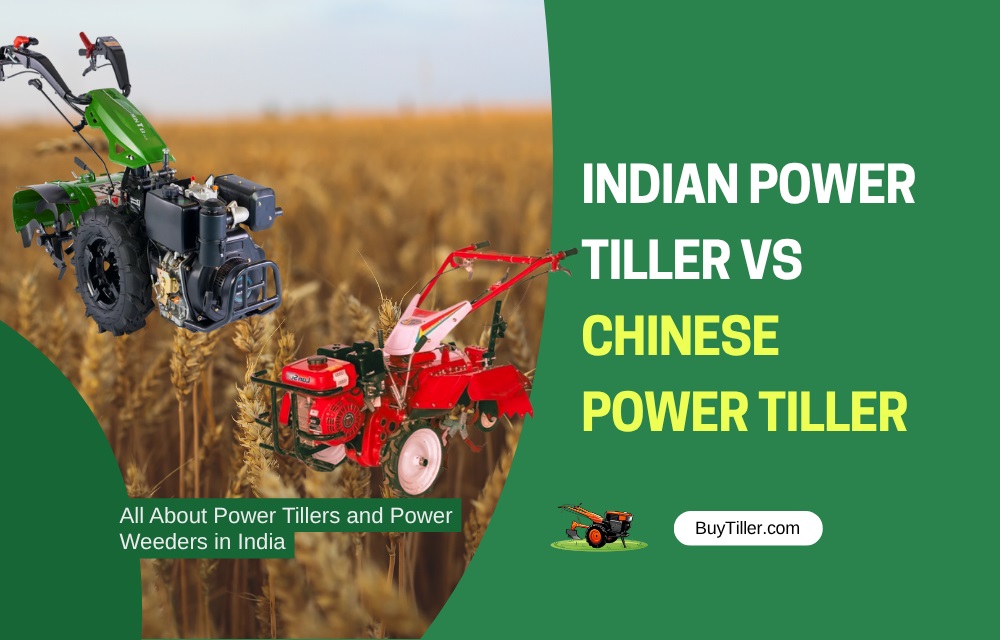
When Indian farmers look to invest in a power tiller, one of the major decisions is whether to buy an imported Chinese tiller or stick with models manufactured locally. Each option has its pros and cons in terms of cost, parts availability, performance, and suitability for Indian soil and farming practices. This article dives deep into the comparison to help you make an informed decision.
Why the Debate Matters
China has become a large exporter of agricultural machinery, including power tillers, often offering lower upfront costs. Meanwhile, Indian-made tillers—from brands like VST, Kirloskar, Honda, Greaves, etc.—come with the advantages of local support, parts, and designs adapted for the Indian climate and soils. Understanding the key differences can save you money and frustration in the long run.
Key Comparison Criteria
- Price / Initial Cost – What you pay now vs what you pay over time.
- Parts Availability & After-Sales Support – How easy is it to get spares and safe repair service?
- Engine Performance & Fuel Efficiency – How well the power tiller runs under real Indian conditions (humidity, dust, load)?
- Durability & Build Quality – How tough is the tiller if used in heavy soil or for multiple attachments?
- Suitability for Indian Farms & Terrain – Hills, ridged land, paddy, intercropping, small plots.
Chinese Imports: Pros & Cons
Advantages
Some advantages farmers notice when choosing Chinese imports include:
- Lower upfront cost: Many Chinese tillers cost 15–30% less than equivalent Indian-made models for similar HP ratings (e.g. 8-12 HP range).
- More features per rupee: Sometimes accessories like transport wheels, trailer kits, extra tilling blades or belt-driven pump attachments come bundled or at lower incremental cost.
- Lightweight designs: Some Chinese models are easier to transport and maneuver, useful for small farms or hilly terrain.
Disadvantages
However, there are also some downsides:
- Spare parts scarcity: When something breaks, parts may take a long time to arrive, or may be more expensive relative to quality.
- Lower durability in harsh conditions: Components like gearboxes, clutches, and cooling systems may be less rugged, leading to more frequent repairs.
- Fuel efficiency issues: Less optimized engines may burn more diesel or petrol per hour, increasing operating costs.
- Support and warranty risk: Warranty claims or service can be harder if the importer or dealer is not established locally.
Indian-Made Models: Pros & Cons
Advantages
Indian brands offer several strengths that many farmers value:
- Proven parts network: Brands such as VST Power Tiller, Kirloskar Power Tiller, and Honda Power Tiller have wide spare parts availability across India.
- Adaptation to Indian soil & climate: These tillers are built to handle monsoon-soft soil, hilly terrain, heavy clay, etc.
- Better resale value: Indian models often hold value better, due to brand recognition and trust.
- After-sales service & warranty: Dealers, service centers, and trained mechanics are more likely to be available in your area.
Disadvantages
No machine is perfect—Indian-made models have some trade-offs:
- Higher sticker price: For similar specifications, Indian models may come at 10–25% more cost upfront.
- Fewer “extras” bundled in: Often, the base model has fewer accessories included; you may need to buy attachments separately.
- Heavier build: Sometimes, overbuilt parts add to weight, making transport or manual handling more difficult.
Side-By-Side Comparison (2025 Models)
| Specification | Typical Chinese Import Model (10-12 HP) | Typical Indian Model (10-12 HP, e.g., VST / Kirloskar) |
|---|---|---|
| Approx. Price (Ex-dealer, HP/Torque class) | ₹70,000 – ₹85,000 | ₹85,000 – ₹1,05,000 |
| Fuel Consumption (operational, per hour) | ≈ 1.5 – 2.0 litres (diesel) under load | ≈ 1.2 – 1.6 litres (diesel) under similar load |
| Weight (machine only) | ≈ 250 – 300 kg | ≈ 280 – 330 kg |
| Service / Spare Part Availability | Moderate to Low (depends on importer/dealer) | High (authorized service, many spare parts points) |
| Warranty & Dealer Support | 6-12 months (may have limitations) | 12-24 months, widespread service network |
Important Factors for Indian Farmers to Check
Here are some detailed technical and practical checks before making a purchase decision:
- Engine type & displacement: Check if the import uses a “grey” engine vs a certified fuel-efficient model. Indian models often follow Bharat Stage norms and have better fuel-air mixing.
- Clutch & gearbox design: Test clutch smoothness and ability to engage heavy loads without overheating.
- Mulching & tilling blades: Are blades hardened steel, easy to replace, or generic low-cost ones that wear out quickly?
- Cooling / air-filter systems: Indian soil tends to be dusty; a good filter and cooling system prevent breakdowns.
- Attachments compatibility: If you plan to also use seed drills, back rotary tillers, or transport wheels, ensure the machine has PTO support or universal connectors. For example, check guides like power tiller attachments.
- Resale & resale market: Indian made tends to give better resale in local markets.
Case Studies
Case 1: A Farmer in Uttar Pradesh
Mr. Sharma bought a 9 HP Chinese tiller for approximately. ₹80,000. The tiller worked well in initial dry soil for inter-cultivation. But during monsoon, filters clogged, rust developed in exposed parts, and spare gears took 3–4 weeks to arrive. When he switched to a VST 9 HP tiller (cost ~₹1,10,000), the performance was steadier, and parts & service were prompt.
Case 2: A Grower in Tamil Nadu
A vegetable farmer needed a light, maneuverable tiller for small plots. He opted for a Chinese import 10 HP unit (approx. ₹75,000) because of its lighter frame. But over time, under heavy duty with attachments and repeated transporting, the frame showed fatigue. When replaced with a Kirloskar / Honda model, though heavier, the sturdier build lasted longer.
FAQs: Common Questions Farmers Ask
1. Does a Chinese tiller save money in the long term?
Often, the answer is “not always.” While the initial cost is lower, expenses on fuel, repairs, spare parts, delays, and downtime can offset savings. Indian models may appear costlier upfront, but tend to cost less over five to seven years.
2. Are Chinese power tillers legal and compliant in India?
Imported tillers must comply with Indian import regulations, emission standards (if applicable), and quality norms. Sometimes, grey imports skip these, leading to issues with spare parts or warranty.
3. Can I mix and match imported engine blocks with Indian brand accessories or vice versa?
It depends. Some accessories are universal or have adapters. But often, Indian brands’ attachments assume particular shaft sizes, PTO speeds, and engine mounts. Mismatches can lead to inefficiency or damage.
Conclusion
Choosing between a Chinese import and an Indian-made power tiller is a decision that depends on your farm size, how intensively you use the machine, how easy it is to access service and spare parts near you, and your budget. For those in remote areas or who use tillers extensively across seasons, Indian brands like VST, Kirloskar, Honda, and Greaves often deliver better long-term value. If budget constraints are strong and usage is light, a Chinese import may make sense—but only after checking service and parts availability carefully.
If you want help comparing specific models, you can check detailed reviews on our pages, such as Best Power Tillers for Small Farms in India, and find spare parts lists for support-friendly brands via our Greaves Power Tiller Spare Parts List.